
The first memory I have of Catherine is seeing her hands chopping carrots through a small diner-window separating her restaurant from the kitchen. She was wielding her knife rather forcefully and her chops didn’t miss a beat, even when I announced my presence.
“I’m looking for Catherine…” I had practically studdered. We’d been communicating through the website HelpX.net about a job at her hotel in the Albanian Alps, but I’d never spoken to her and I had no idea what she looked like.
There was no response to my greeting from the other side of the wall for several moments until every carrot on Catherine’s cutting board had been properly eviscerated. I’d watched her clean her weapon with a dishrag, smooth her apron and slide towards the kitchen door while my growing anticipation teetered on fear.
I had just spent an entire day venturing from Tirana, Albania’s capital, up to the remote northern reaches of the country. At the base of the mountain, I’d had to barter with a local man who owned a car to drive me an hour up a half-finished road to the only structure I could see for miles: Relindja Bed and Breakfast.
Only now did I realize the vulnerable position I’d put myself in. The man with the car had left, night was approaching and the woman I’d come to meet was, of yet, a disembodied pair of hands brandishing a knife.
The door to the kitchen opened and Catherine emerged from the shadows to reveal a mop of wild, red hair and a giant, enthusiastic grin.
“Hi!!!” she chirped, “Welcome! I’m so glad you made it, did you have any trouble getting here? You’ll be in the room upstairs, first door on the right…”
She talked a mile a minute and in the month I stayed with her, I would never again meet the silent, intimidating hands that left me with my first impression of her. But my awe of her remains to this day.
Catherine’s story is incredible. She’s an environmental warrior, a mountain queen, a wild soul, an intelligent mind — she recounts tales like an ancient orator and can make you laugh until you cry.
Her husband, Alfred, opened the first bed and breakfast in the Valbona Valley, essentially kickstarting the tourism industry there. I worked in their restaurant as a waitress in exchange for room and board but I undoubtedly got more than I bargained for.
Valbona quickly became a very special place to me. I remember chasing cows out of the garden on a daily basis, ironing sheets outside under the mountains and serving a wide collection of characters from all over the world in the hotel’s restaurant.
The guests there were never upset by things that would have normally shocked patrons. One night the electricity went out three times during dinner then the cat brought a dead mouse into the dining room. As if that wasn’t horrifying enough, a few seconds of neglect on the cat’s part revealed that the mouse was very much alive. It sprung up and ran under the tables, pursued wildly by the cat and was again caught in its jowls. I had to remove them both – cat clutching the mouse, I clutching the cat – by carrying them past all of the guests in the crowded dining room.
Anywhere else, watching a cat torment a mouse during dinner would cause guests to walk out without a second thought. But in Valbona it was part of the dining experience, they were all laughing too hard to be upset.
You won’t find this carefree attitude in many other places in the world. It’s something that only accompanies a magical place like Valbona… a place that for hundreds of years was secluded from the rush and grind and hierarchy of the industrial revolution.
And maybe I would have known the value of the valley just by being there. But with Catherine around — there was no way to miss it. My friendship with Catherine bonded me with her home on a deep level and rallied my heart to her cause.
Catherine and I talked often and openly about the issues that people living in Valbona were facing. It had only been 10 years since the construction of a road into the valley had made it accessible to the common traveler. Before that, the only way in or out was through a network of trails known only to the locals there. This meant that for hundreds of years, the population of Valbona had lived in almost complete isolation from the rest of the world.
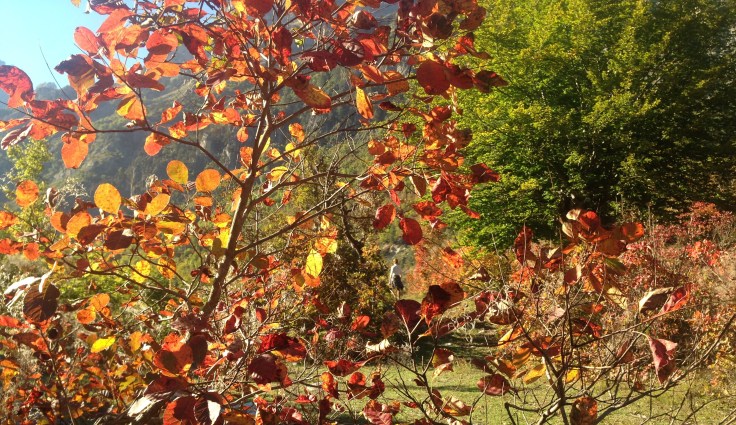
Today, the majority of families there still live in wooden stick-houses called “stans”. The men herd goats and women bake a vegetable-stuffed pastry called “berek” over an open firepit. The hills are untouched by construction, the air so crisp and clear that sunlight bounces off the earth below as if it were a mirror. Visiting Valbona is like stepping back in time.
Of course, things are beginning to change. Tourism grows every year as people flock to one of Europe’s last, untouched natural wonderlands. This influx of visitors has had both a positive and negative impact on the community there. While it threatens the traditional way of life, it also provides the young people with incredible new opportunities.
I met one boy named Salum — 11 years old with the confidence of Justin Beiber — who had built a tourism business out of his stan in the mountains. Catherine had helped him mark trails with red paint so that his stan could be a destination along a hiking path. His grandmother brewed mountain tea from leaves of the forest to serve to his guests and made up beds for them to stay the night. In return, his visitors would pay a donation — whatever they could afford.
“What’s important,” Catherine told me on one of our hikes, “is that the local people have control over the coming changes. They should be the ones benefiting from the growth in tourism, not some foreign NGO.”
She was referring to some particularly devastating interactions she’d witnessed, where foreign companies would set up projects in the mountains — trail marking, for instance — without consulting locals. Although their intentions might have been to help, they ostracised the population that would be most affected by their projects and often left the valley in worse shape than when they started.
Since I’ve left, the community has continued to face invasive construction that threatens to forever alter the natural landscape of Valbona Valley and even, in some instances, to push locals from their homes… but not if Catherine can help it.
Some would say it’s not Catherine’s fight. She is not, after all, one of the locals whose rights she struggles so hard to protect.
Catherine came to Albania for the first time around 2003, after selling the bookstore she’d run in New York for many years.
“I remember visiting my mother’s family in Croatia when I was a little girl,” she told me, “and on the boat there, we sailed past the Albanian Alps. I don’t know why, but I wanted to come here ever since.”
As it turned out, even other Albanians thought it was a strange idea. Valbona Valley has been so disconnected from the rest of the country for so long, that she had a hard time finding anyone that would take her where she wanted to go.
“You’re crazy,” they told her, “nothing goes on up there!”
Still, Catherine persisted (unsurprisingly — persistence is one of her most defining traits). She made it to Valbona, fell in love with a young, handsome hotel-owner and made Albania her full-time home. She’s now fluent in the language, she teaches at the local school a few times a week and people there know her to be part of the community.
Catherine has a unique position in the fight to protect Valbona Valley. She understands –having lived the West, where nature is valued for a different kind of green — just how irreversible the effect of commercialization can be. Her access, early in life, to higher education, is an important tool as she and her neighbors wrestle the legal system for protection for their lands. She fights every day for the people she loves and the land she now called home and it’s that passion that inspires my complete awe and affection for her.
You don’t always get to choose the battles you fight. It’s not always the battle in your own backyard. Some whim on the ocean brought Catherine to an Albanian mountain community and gave her the option to pick up her sword. And she did.
When it was time for me to leave, Catherine and I both cried. It’s always hard for me to move away from a place that I love, but when I left Valbona I felt like I was abandoning it mid-fight, in a vulnerable state. At least, with Catherine there, I know that it’s in good hands.
***
 Travel Like Bird
Leave a comment