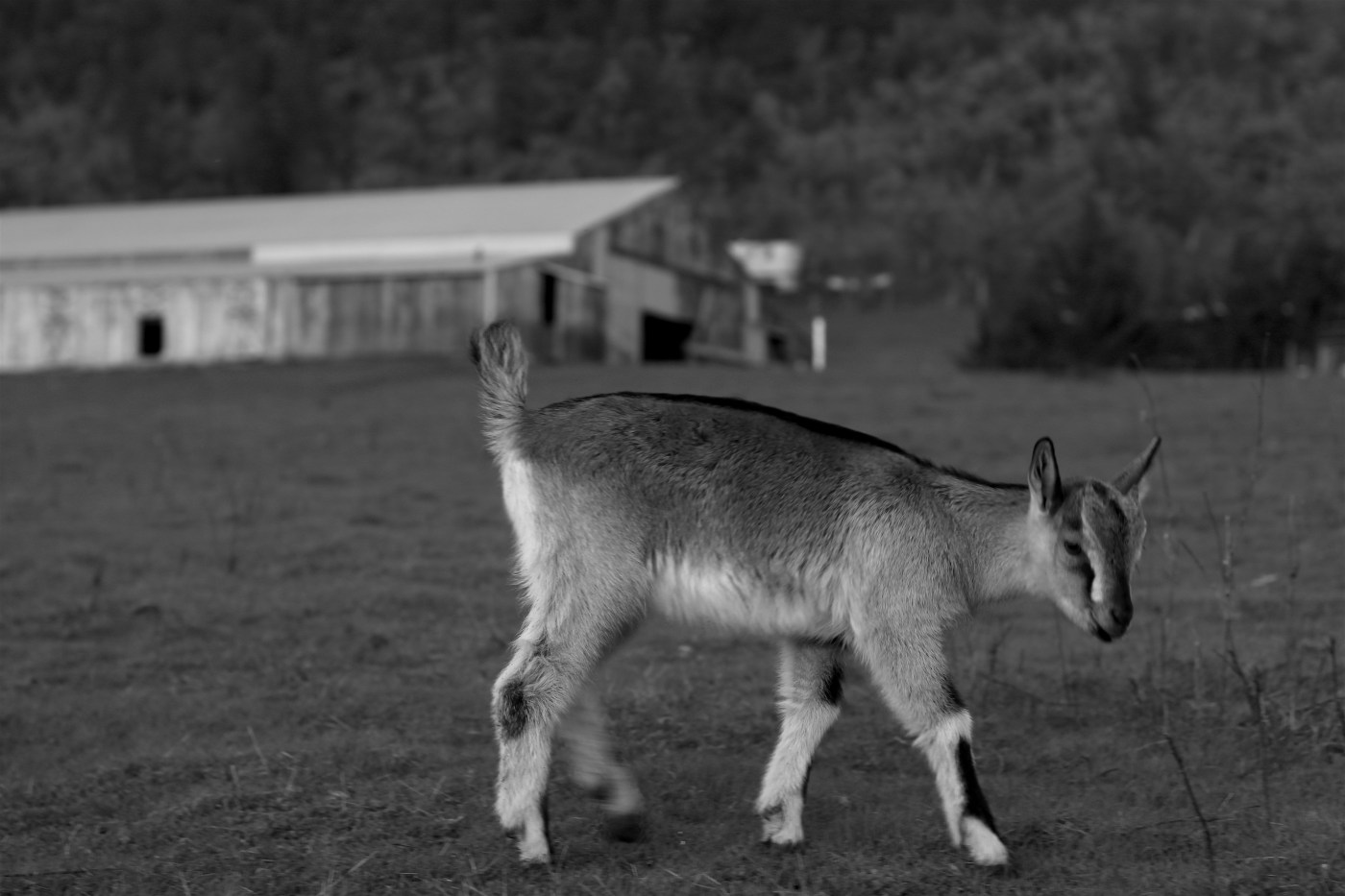
There were no roosters to crow at Sugarfield Farm, but the 300 other animals made plenty of noise to rouse me from sleep long before my alarm. In most places that I visit, I eventually learn how to tune out the buzz in the atmosphere. The sounds of the babbling creek out back or the steady zoom of traffic eventually fade away into the background. But the longer I stayed at Sugarfield, the more I seemed to hear.
There were the horses getting antsy in the arena, the chickens clucking in waves of unanimous hysteria, the quieter bleating of the sheep down in the field and an occasional roar-like bark from their guardian dogs. By the end of my stay, my ears were even attuned to the metallic creak of the rabbit cages across the barn as their inhabitants shifted from one end to another.
I had never worked on a farm before, but it had been a romanticised dream of mine for some time. The farmer’s way of life seemed simpler and more honest than any other I could imagine. In my mind, farmers were happy people who milked cows named Bessie, played banjo after a hearty supper and slept well knowing that they’d put in a good day’s work. I knew hardships were bound to befall farms perhaps a few times a year but, I believed, these were the challenges that gave farmers character.
I worked at Sugarfield for one month. The first few weeks I worked as a farmhand, helping out Pony (the owner/farmer, not a horse) with chores around the property. Then for one entire week, I acted as the sole warden of Sugarfield and all of its inhabitants when Pony left me to care for the farm while he was at sheering school.
The first thing I learned after Pony left was that farmers don’t have time for banjos and that the hard day’s work never ends. The language you learn to speak with the animals doesn’t stop being spoken when the sun goes down. No matter the hour, each quack, cluck, whinny or bleat has to be analyzed and answered to.
My first night alone at the farm, I collapsed into bed after a long day of wrestling eggs away from chickens, hauling rabbit cages across the yard and herding sheep in and out of their pen. I was slipping quickly into sleep when I heard a sudden burst of loud chirping from the chick pen. I thought about getting up to check on them but chicks chirp all the time and I convinced myself that nothing was wrong.
The next morning I awoke to find that two dozen chicks had died in an unexpected cold front overnight. This was a hard lesson for me to swallow and it forced me to be more in tune with the animals in my care. I listened, even in my dreams, to every sound the animals made. Were they healthy? Were they safe?
This conversation helped me be a better guardian but it also created an intimacy with the animals I’d never experienced before. Over time, each of the animals I looked after at Sugarfield taught me things about themselves and even more about life as a whole.
Chapter I – Goat
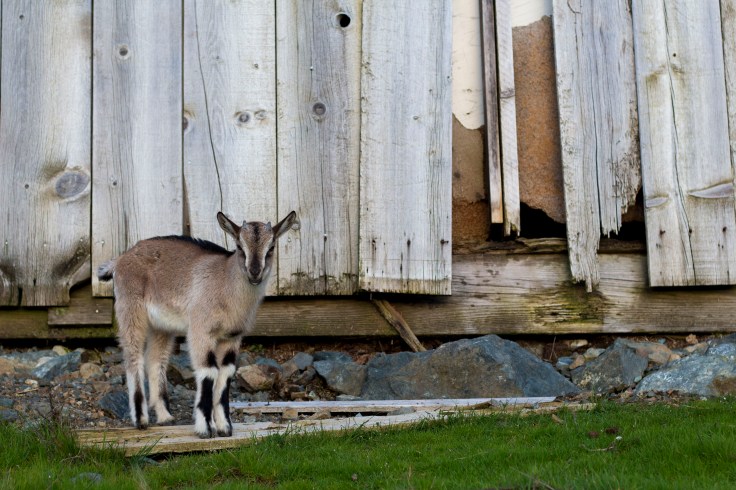
Arrow was about the cutest little thing I had ever seen. His fur was soft and grey, he had tiny little flat-topped teeth that showed when he opened his mouth to be bottle-fed and a floppy little tale that wiggled when he was happy. He followed me everywhere and when I’d bend down to care for other animals, he’d hop on my back with his dainty little hooves like I was a mountain rock to be conquered. Everything Arrow did was cute. If he ever lost sight of where I was, he’d cry out for me with the most adorable, musical, microscopic “Blehhh!” and run to me with his clicky little hooves when I called out his name.
One of my chores at Sugarfield was to take Arrow for hikes in the surrounding mountains. At first, I was worried he’d run off somewhere, but Arrow never strayed too far from my ankles. In many ways, I was his mother and he trusted me to guide and protect him.
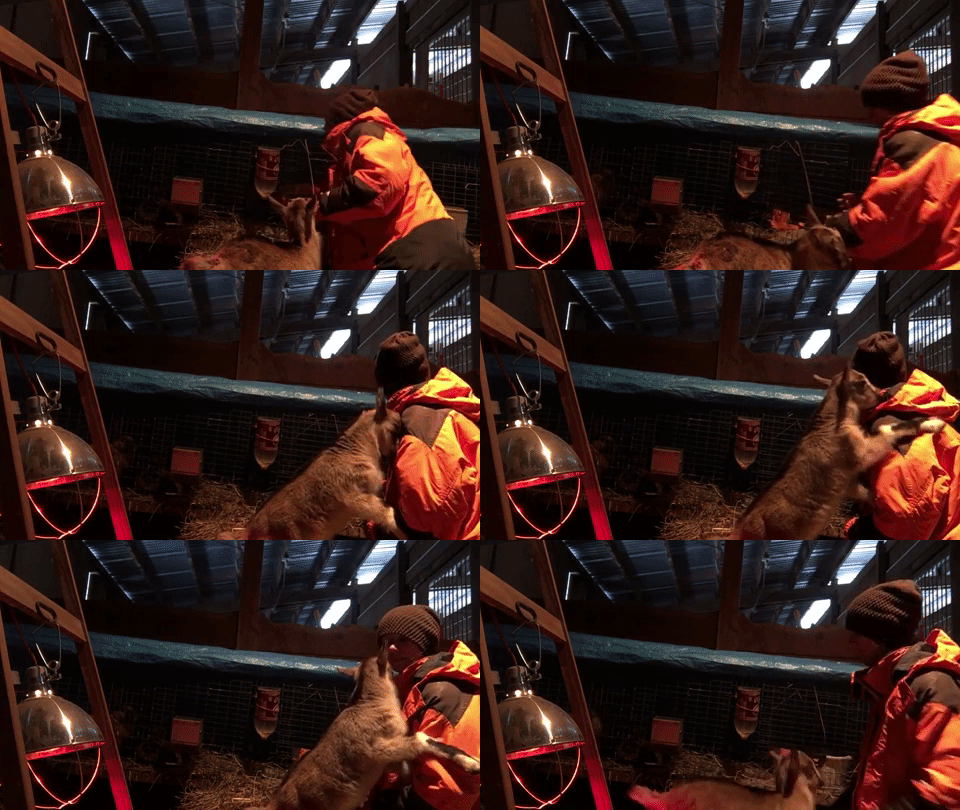
Every night when I had to put Arrow in his pen, he’d cry as I shut the door and it’d take all of my strength to walk to the barn house without going back to soothe him. Pony never let Arrow inside the house or babied him the way I did (although sometimes I did catch him indulging in some goat cuddles). I didn’t understand why until, about 2 weeks into my stay, Arrow suddenly and unceremoniously grew up.
You know those moody teen years that parents dread, where little angels transform into wild, uncontrollable nightmares? Apparently, goats go through a similar process.
Arrow was about the most obnoxious thing I had ever seen. His fur was getting tough and coarse, he had gnawing little flat-topped teeth that nipped at your fingers when he demanded to be bottle-fed and a floppy tale that wiggled when he was up to no good. He followed me everywhere and when I’d bend down to care for other animals, he’d hop on my back with his knife-sharp hooves like I was a mountain rock to be destroyed. Everything Arrow did was horrible. If he ever lost sight of where I was, he’d cry out for me with the whiniest, most grating, blender-like “Blehhh!” and run to me with his stompy hooves no matter how hard I tried to hide.
We tried to put him with the other goats but the little stinker would somehow wiggle through the electric fencing and make his way back up to the barn. There was no escape.
When I really thought about it, Arrow was doing all of the same things he’d always done. The only thing that was changing was his body. It wasn’t cute anymore when he rammed his head into my leg because his horns were growing in and his strength could break my kneecap.
All I wanted was for things to go back to the way they were, but of course, that was impossible. Instead, we had to teach him how to behave in his new body. We had to help him grow up.
It was a strangely emotional process for me. There was a dizzying back and forth of sentiments. I felt anger at something that he’d done alongside sympathy for the transition he was going through. Most of all, though I couldn’t put it into words at the time, I think I was grieving the loss of the way he used to be.
I visited Sugarfield a few months ago and I made sure to check on Arrow, out with the sheep and the other goats (he eventually got too big to wiggle through the netting). He didn’t run at me when I entered the pen, he kept a respectful distance. I pet him on the chin and he accepted it without affection, then returned to munching up grass when I was finished. It was still a little sad. I still missed the cuddly little goat that I had known, but I was also proud of the goat he had become.
Chapter II – Ducks
There were four ducks at Sugarfield and they were by far the coolest animals on the farm. Pony let me name them and immediately regretted it after I announced that they were to be called Janeway, Picard, Kirk and Sisko (or The Captains as a whole).
I could spend hours watching The Captains. I’m not sure why, exactly, but they were unceasingly entertaining. They were also frustratingly cliquish.
I could only observe from afar as they gabbed, waddled, quacked jokes and shared what appeared to be the best kind of fun. As soon as I would approach them, they’d get very quiet and waddle uneasily in the opposite direction as if I was the smelly kid trying to sit at their lunch table.
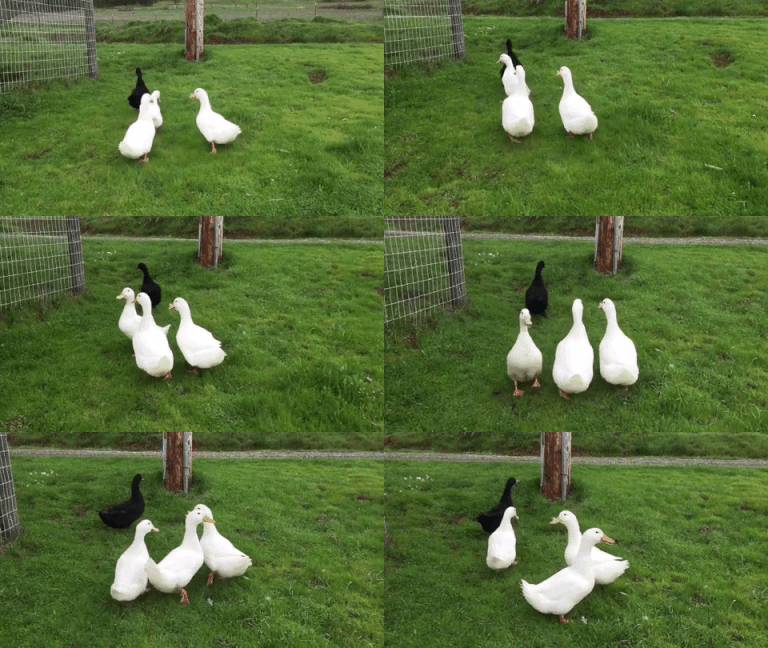
The closest I’d get to earning acceptance from them was when I would re-fill the little plastic pool in their pen. Never before have I witnessed such unabashed joy as those ducks leaping gleefully into the freshly filled pool, lifting their faces into the spray of the hose as if it were holy water raining down from heaven, and quacking merrily to one another in exuberant agreement that there was nothing better in the world. Just for that moment, they would forget I was there and I could silently share in their excitement, pretending that I was part of The Captain’s Club.
After a couple of weeks of this, Pony and I thought of a way we could earn some favor with the cool kids. If they enjoyed their little pool so much, think of how they would respond to a full-sized pond! Surely if we could give them that, they’d at least have to stop giving us the cold shoulder every time we got within 10 yards. The only problem was that getting them to the pond meant picking them up and carrying them — something The Captains were NOT fond of.
If being ignored by The Captains was hard, it was much worse to be feared and disdained by them. If we can only get them to the pond, I thought as I chased them, wide-armed, around their pen, they’ll understand and offer their forgiveness!
I got ahold of Picard and wrapped him tightly in my arms. My heart beat fast as I carried him to the pond — I felt like I was embracing a celebrity. The other Captains followed at a distance, offering supportive quacks to their friend but I pretended they were supporting us both.
Reaching the pond, I triumphantly set Picard down in the shallows of the water. He looked curiously at me and then the pond, washed his beak in the waves and then… darted back up the hill to join the other ducks. I was shocked. Was he going to tell them about the amazing, giant pool? No. Instead, they all raced back into their pen and quacked quietly to each other about the trauma they’d just endured.
After that, we started leaving their pen open during the day and The Captains found their way back to the pond eventually. We received no credit and exaggerated shunning.
It always amazes me to watch animals bond. As much as I anthropomorphized the ducks, the relationships I’m describing were real. These ducks loved each other and depended on one another.
All of the animals at Sugarfield were dependent, I realized one day, not just on the farmer to feed and care for them, but on their pack — whoever that may be. The sheep moved as one giant unit wherever they went and the rabbits huddled together in their cages. Even Hershey, the lone fat donkey, had been adopted by the team of horses on the farm.
I have a tendency to put independence before community but whenever I’d watch The Captains I was reminded of how important relationships are.


All of the ducks but Sisko were killed one night by the neighbor’s dog. It was honestly one of the saddest things I’ve ever experienced. Sisko spent long nights quacking up at the stars as if trying to reach the other Captains on his com-badge. He was lonely without them.
Eventually, Pony bought a little flock of ducklings to keep Sisko company, and they bonded quickly. The ducks are happy and cliquish as ever. Still no humans allowed.
Chapter III – Chickens
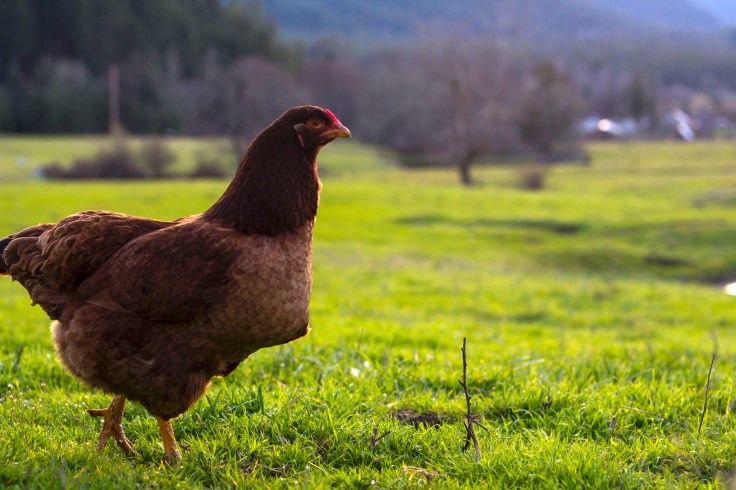
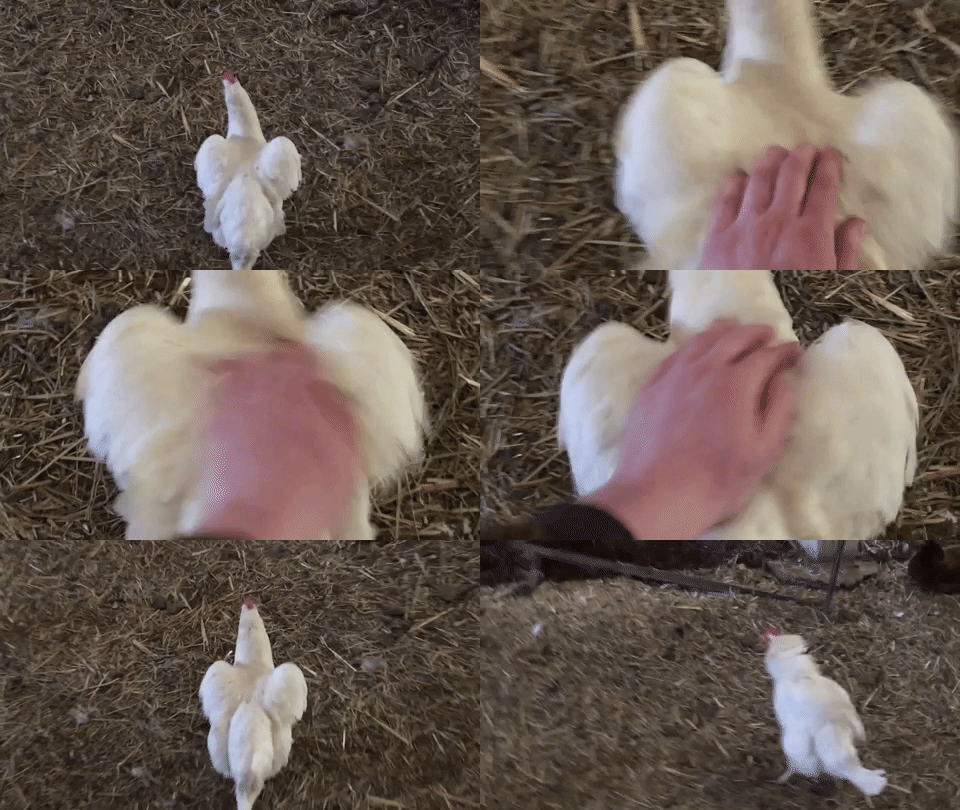
The most delightful thing I learned about chickens is that they like to be pet. In fact, they’ll specifically request it by squatting in front of you when you walk by, spreading their wings just a little, and waiting for you to vigorously scratch their backs. Then, when you’re finished, they’ll stand up tall and fluff up all of their feathers with a satisfied shimmy. It made me smile every time.
But the chickens also taught me another lesson that was far less amusing.
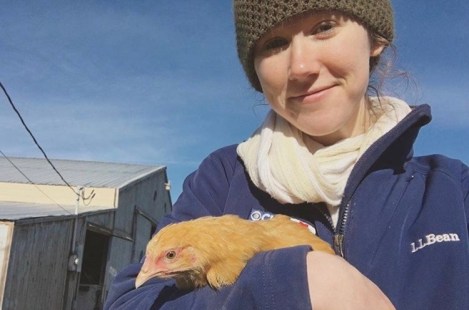
She was a younger chicken, still gangly and sporting short, blond feathers. We found her in the duck’s swimming pool. She’d been chased there, presumably, and gotten stuck in the chilly waters.
Pony and I brought her into the house and wrapped her in a towel but things did not look good. Her eyes wouldn’t stay open for more than moments at a time and her head drooped to one side or the other. I held her close to my chest for nearly an hour, trying to rub off some of my own body heat but her skin remained cold to the touch.
“She’s not going to make it,” Pony told me sadly. He was no stranger to death, and he knew the signs.
But I couldn’t bring myself to accept it. Death was a conquerable foe, I thought, I’d seen it defeated in stories since I was a child.
For some reason, I kept thinking of a scene in the animated movie 101 Dalmatians where the maid brings out a puppy that didn’t make it. Bernard starts rubbing the puppy’s back and with willpower alone, rubs him back to life.
I knew it was a movie, and a children’s film at that, but there was still a piece of me that believed in the magic of cartoons. So I rubbed. I rubbed her back and her head and her cold, fleshy feet and when she started to sleep I’d rub harder. It was almost trance-like. I lost track of time, I forgot about everything but the chicken in my hands.
Then suddenly, she opened her eyes — not for a passing moment, but definitively. Her head, I realized, was steady on her neck and she let out a tired little cluck as if to say, “Where am I? What happened?”
I named her Moon because the moon was full and bright the night she survived. The next day I reunited her with her flock, assured that death was not so omnipotent as it proclaimed.
Sometime later, I discovered a blonde chicken that had been mauled to death by a dog. I can’t say for sure it was Moon, but it might as well have been. Death had come to prove its power.
By then my hands had touched many lifeless forms. There were the 24 chicks that had frozen in the night. A rabbit that had passed of a mysterious, paralyzing illness. The first lamb of the season had filled the farm with excitement until we found her twin brother who hadn’t survived the birth.
Death is as much a part of farming as is life. What I respected the most about Pony’s farm was that, although death was imminent, life was important.
Pony took good care of his animals. He fed them organic foods and provided them with room to range and live healthily. He mourned the loss of every life in his care and did his best to put death to good use. The animals that died were fed to the animals that lived. Their death helped sustain life.
Farming taught me to be aware of mortality. I learned not to fear death but to respect it. To mourn, but mourn with gratitude for a life well-lived.
Chapter IV – Sheep
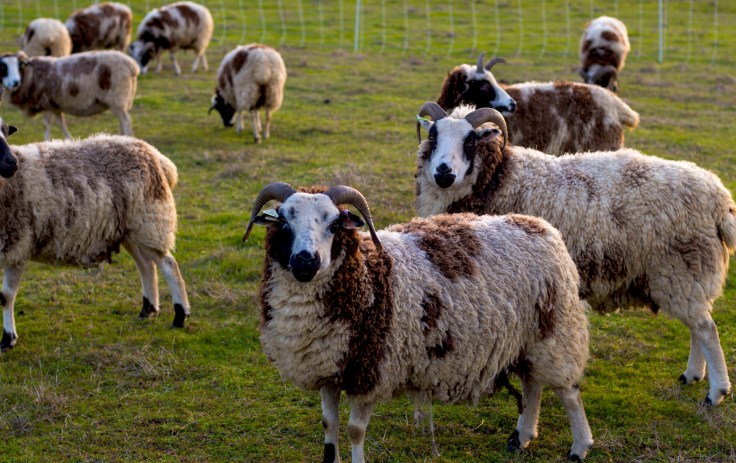
It was a single “BAH” that alerted me to the fact that something was not right. The “bah” had not drifted – as it should have – up the rolling green hills to the barn apartment where I had just sat down for breakfast. Instead, it pounded loudly off the front door: “BAH!”
I froze, sandwich inches from my mouth, and listened, hoping it had been a trick of the ear but another thunderous “BAH!” landed on the window. A bit panicked, I rose and flung the door open to find myself in a sea of escaped sheep. The sight of me sent a ripple of “bahs” through the crowd but they were not the frantic “bahs” of children caught in a bad act. They were lazy, laughing “bahs” – probably at the look of shock and horror on my face. Sheep, I found, are naturally mocking creatures.
My short time as a wanna-be farmer had not prepared me for a predicament like this and I had no idea how to get the sheep back where they belonged.
My first mistake was calling out K’ass the dog to help me. She was incredible at wrangling the sheep on the open plain, where the flock could see her sweeping across the hills and run in the opposite direction, but here in the barn, there were too many barriers in place. The sheep didn’t know how to get away from her and it sent them into a confused panic. Half the flock ran one way, half the other until they were all separated into stalls and corners “bahing” desperately to be reunited.
I realized my mistake, sent K’ass inside, and turned back to face the sheep alone. My only wrangling experience had been herding cows at a summer camp one year, so I gave that method a go. I came up behind a big group of sheep and cried “Hey-YAH” like a good, old-fashioned cowhand. The sheep stared back blankly. “Hey-YAH!” I tried again, this time clapping my hands. The sheep moved in a circle and ended up right where they’d begun.
Next, I remembered that you get horses to move by slapping them on the behind. So, I gave one of the sheep a respectful smack on the wool and she “bahed” back at me with confused contempt. Everything I tried seemed to backfire in the worst way.
I opened one of the barn doors hoping it would create a clearer path out to the field but the sheep used it to get into the hay room for a snack. While I was clearing the sheep from that room, they stepped on a bunny cage in another and set 4 rabbits free. The chickens were in a panic, K’ass barked from inside the house, rain began to pour — it was chaos.
The battle of wills continued for two hours until I was soaking wet and the sheep were more widely scattered than when I’d begun.
Finally, in an act of sheer (pardon the pun) desperation, I grabbed one of the sheep by his horn and walked him like a disobedient child out into the field. The thought was that I could grab the sheep one at a time and escort them individually to their pen. It would take an eternity but I was out of other options.
The sheep I’d grabbed was strangely compliant. I walked him easily all the way to the corner of the pen, turned around to snatch my next victim and was shocked to be met with the entire flock of disinterested sheep eyes as they joined their brother within the electric netting.
Breathlessly, I waded through their wooly bodies, closed the gate and stepped back to survey the scene. 1, 2, 3… I counted them several times until I was sure they were all there. It felt unreal. The sheep stared vacantly with grass in their mouths, the sun shone through the parting clouds and the hills echoed with a few contemptuous “BAH’s”.
I stayed with the sheep a while longer and contemplated the value of respect in leadership. Just because we’re in charge of a certain group, I pondered, doesn’t mean we’ll be given unquestioning obedience. Animals have their own culture and their own instincts… we can’t just bully them into behaving the way that we want them to, we have to understand them first.
I had been trying for hours to drive these sheep into the pen like cattle, but that’s not the way sheep operate. Sheep are followers. They have no idea how to respond when you come up behind them and clap and had I known that I could have gotten them to safety much faster.
Understanding, I decided, is one of our most important tools. Without it, we’re just overconfident, gesticulating fools inciting chaos in the masses.
 Travel Like Bird
Leave a comment